
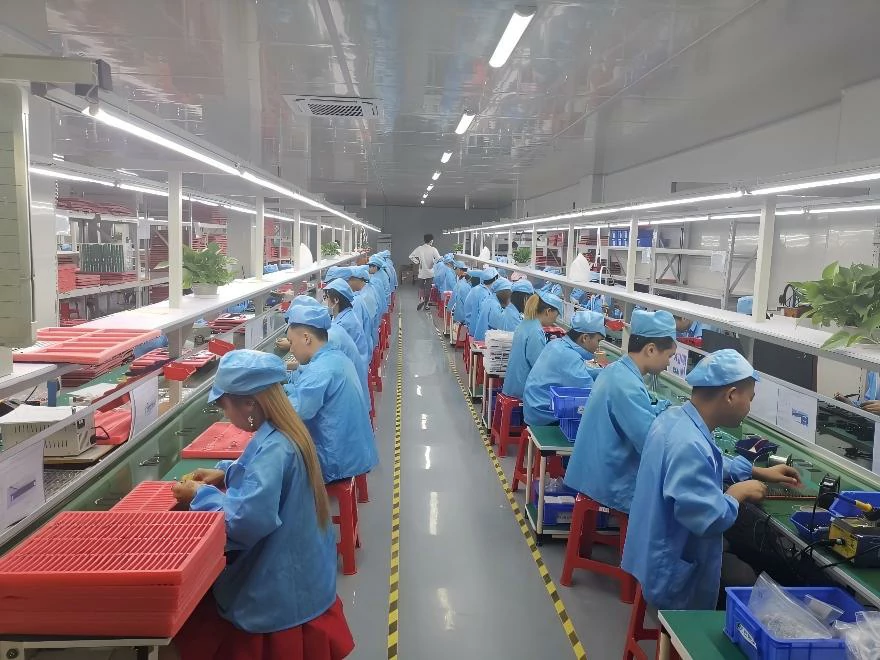
As wearable devices evolve from simple step counters to sophisticated health monitoring systems, the manufacturing infrastructure required to produce these devices has become increasingly complex. Shenzhen Haxen Wear Co., Ltd.’s recent facility expansion illustrates how ODM manufacturers are investing in advanced equipment to meet the technical demands of next-generation wearables.
The Health Monitoring Revolution
Wearable technology in 2025 offers smarter tracking, advanced sensors, and tangible health benefits that extend far beyond counting steps. Modern smartwatches and wearable devices now incorporate:
- Continuous heart rate monitoring with medical-grade accuracy
- Blood oxygen saturation (SpO2) measurement
- Blood pressure estimation algorithms
- Sleep stage analysis (light, deep, REM sleep)
- Stress level assessment through heart rate variability
- Female health cycle tracking
- ECG (electrocardiogram) capabilities
- Body temperature monitoring
This evolution from fitness gadgets to health monitoring devices requires fundamentally different manufacturing approaches, quality systems, and testing protocols.
Manufacturing Infrastructure for Medical-Grade Devices
Shenzhen Haxen Wear’s investment in ISO13485 certification—the international standard for medical device quality management systems—reflects the industry’s shift toward health-focused wearables. This certification requires:
Controlled Manufacturing Environment: Cleanroom protocols, environmental monitoring, and contamination control to ensure sensor accuracy and device reliability.
Traceability Systems: Complete tracking of components, assembly processes, and testing results for each device, enabling recall management and quality investigations.
Validation Protocols: Rigorous testing and documentation proving that manufacturing processes consistently produce devices meeting specifications.
Risk Management: Systematic identification and mitigation of potential device failures that could impact user health or safety.
The company’s MES (Manufacturing Execution System) with anti-error capabilities provides real-time production monitoring and prevents assembly errors that could compromise device functionality—critical when devices are used for health decision-making.
Advanced Testing for Reliable Health Data
The accuracy of health monitoring features depends heavily on sensor quality, calibration, and environmental protection. Shenzhen Haxen Wear’s testing laboratory includes specialized equipment addressing these requirements:
Environmental Testing: Programmable temperature-humidity chambers and thermal shock testing (rapid temperature cycling) ensure devices maintain sensor accuracy across the temperature ranges users experience—from air-conditioned offices to outdoor summer heat or winter cold.
Waterproofing Validation: Multiple waterproof testing systems (50-meter, 100-meter, and 160-meter pressure testing) verify that moisture cannot infiltrate sensor areas or electronic components. Water ingress can cause sensor drift, battery damage, or complete device failure.
Sensor Calibration: Electroacoustic testing equipment and specialized biometric sensor validation ensure heart rate, blood oxygen, and other health measurements meet accuracy standards.
Durability Testing: Button life testing machines (simulating thousands of button presses), drop testing, tumble testing, and impact testing validate that devices withstand real-world use without sensor misalignment or damage.
Electromagnetic Compatibility: ESD (electrostatic discharge) testing ensures devices aren’t damaged by static electricity and don’t interfere with other electronic devices—important for medical environments.
The Challenge of Miniaturization
As consumers demand smaller, lighter wearables with longer battery life, manufacturers face the challenge of integrating more sensors and functionality into constrained spaces. This requires:
Precision Assembly Equipment: Shenzhen Haxen Wear’s automated screw-locking machines, piezoelectric glue dispensing systems, and multi-axis dispensing robots enable consistent, precise assembly of miniature components where human hand assembly would be unreliable.
Advanced Bonding Technologies: Plasma cleaning machines prepare surfaces for adhesive bonding by removing microscopic contaminants, ensuring waterproof seals remain intact throughout device lifetime.
Optical Inspection: Two-dimensional measurement systems verify precise component placement and dimensional accuracy critical for sensor alignment and waterproof seal integrity.
Smart Manufacturing for Complex Products
The electronics manufacturing industry is being reshaped by smart manufacturing, sustainability initiatives, and AI integration. Shenzhen Haxen Wear’s implementation of advanced manufacturing technologies reflects these trends:
Automated Quality Control: High-precision barcode scanners (600dpi Zebra printers and Honeywell scanning guns) integrated with MES systems ensure component traceability and prevent counterfeit parts from entering production.
Process Automation: Automated screen protector application machines, heat shrink packaging systems, and robotic dispensing reduce human error and improve consistency.
Data-Driven Optimization: Production monitoring systems collect real-time data enabling continuous process improvement and rapid identification of quality issues.
Regulatory Pathways and Certifications
As wearable devices incorporate more sophisticated health monitoring capabilities, regulatory considerations become increasingly important. While most current smartwatches are classified as general wellness devices rather than medical devices, the line is blurring as accuracy improves and clinical validation studies emerge.
Manufacturing partners with ISO13485 certification and experience with medical device quality systems provide U.S. brands with a pathway to pursue FDA clearance or other regulatory approvals if they choose to market devices with medical claims.
Shenzhen Haxen Wear’s successful audits by major retailers (Walmart, Disney) and telecommunications companies (Haier, China Mobile) demonstrate capability to meet diverse quality and compliance requirements—valuable experience when navigating the complex landscape of wearable device regulations.
The ODM Advantage for Health Tech Startups
Developing health monitoring wearables requires expertise spanning industrial design, electrical engineering, sensor technology, firmware development, mobile app integration, regulatory compliance, and manufacturing. Few startups possess all these capabilities in-house.
ODM manufacturers like Shenzhen Haxen Wear enable health tech entrepreneurs to focus on their core competencies—whether that’s algorithm development, clinical validation, user experience design, or market positioning—while leveraging the manufacturer’s expertise in hardware development and production.
The global OEM and ODM services market for consumer electronics is expanding as product complexity increases and brands seek specialized manufacturing partners. Industry innovations including flexible PCB manufacturing, embedded AI, and advanced materials are reshaping ODM capabilities.
Looking Forward: AI and Predictive Health
The next frontier in wearable health monitoring involves AI-powered predictive analytics—using continuous sensor data to identify health trends and predict potential issues before they become serious. Generative AI integration is identified as a key trend for wearables in 2025.
Manufacturing this next generation of devices will require even more sophisticated sensor integration, increased processing power in miniature form factors, and enhanced data security—all while maintaining or improving battery life. Manufacturers investing in advanced equipment and quality systems today are positioning themselves to support these future innovations.
About Shenzhen Haxen Wear Co., Ltd.
Shenzhen Haxen Wear Co., Ltd. provides comprehensive ODM/OEM manufacturing services for smart wearables, consumer electronics, and communication devices. The company’s 9,000-square-meter Shenzhen facility features advanced testing laboratories, automated production equipment, and quality management systems certified to international standards including ISO9001, ISO13485, ISO14001, ISO50001, ISO45001, and BSCI.
Contact:
Website: https://haxenwear.com/
Email: allen@haxenwear.com
Phone: +86 13192270825