
Industry Analysis – November 2025
As U.S. brands increasingly outsource electronics manufacturing to focus on design, marketing, and customer experience, selecting the right ODM (Original Design Manufacturing) partner becomes critical to success. The global OEM and ODM service market for consumer electronics is projected to grow from $231.8 billion in 2021 to $285.4 billion by the end of 2025.
This growth reflects the increasing complexity of consumer electronics and brands’ strategic decisions to partner with specialized manufacturers rather than building in-house production capabilities. However, not all ODM partners offer equivalent capabilities, quality systems, or reliability.
Understanding ODM vs. OEM vs. Contract Manufacturing
Contract Manufacturing: The brand provides complete product designs, specifications, and often sources components. The manufacturer simply assembles products according to specifications.
OEM (Original Equipment Manufacturing): The manufacturer produces products based on the brand’s designs but may source components and manage the supply chain.
ODM (Original Design Manufacturing): The manufacturer provides design services, engineering expertise, component sourcing, and manufacturing. Brands can select from existing designs or collaborate on custom products.
ODM partnerships offer the greatest value for brands lacking in-house hardware engineering teams or seeking to accelerate time-to-market. However, they require manufacturers with broader capabilities beyond assembly.
Key Evaluation Criteria for ODM Partners
1. Quality Management Systems and Certifications
Certifications provide objective evidence of a manufacturer’s quality systems:
- ISO9001: Quality management system standard
- ISO13485: Medical device quality management (critical for health wearables)
- ISO14001: Environmental management
- ISO45001: Occupational health and safety
- BSCI: Business Social Compliance Initiative (ethical manufacturing)
Shenzhen Haxen Wear Co., Ltd. holds all these certifications, demonstrating comprehensive quality and ethical manufacturing systems.
2. Testing and Validation Capabilities
Advanced products require sophisticated testing beyond basic functionality checks:
- Environmental testing (temperature, humidity, thermal shock)
- Waterproofing validation (pressure testing, leak detection)
- Durability testing (drop, tumble, button life)
- Electromagnetic compatibility (EMC/ESD testing)
- Specialized testing (audio quality, sensor calibration)
3. Production Capacity and Scalability
Brands should evaluate:
- Current capacity: Can the manufacturer handle your initial order volumes?
- Scalability: Can they ramp up production as your brand grows?
- Production flexibility: Can they handle multiple SKUs or product variations?
- Lead times: What are typical production cycles from order to delivery?
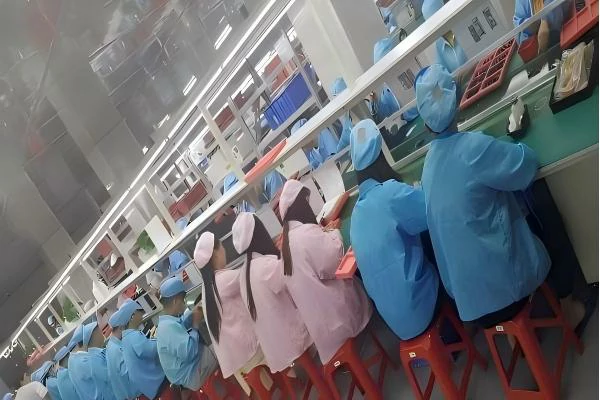
Shenzhen Haxen Wear’s 10 production lines with annual capacity of 10 million units provides flexibility for both startup brands and established companies.
4. Supply Chain Management
Effective supply chain management includes:
- Component sourcing relationships with reputable suppliers
- Inventory management systems
- Quality control of incoming materials
- Traceability systems for components and finished products
Industry Trends Reshaping ODM Relationships
Automation and Smart Manufacturing
The electronics manufacturing industry is being transformed by:
- Robotic assembly systems
- AI-powered quality inspection
- Manufacturing Execution Systems (MES) with real-time monitoring
- Automated testing and validation
Flexible PCB and Advanced Materials
Industry innovations including flexible PCB manufacturing, embedded AI capabilities, and advanced materials are reshaping ODM capabilities.
Sustainability Requirements
U.S. consumers and regulations increasingly emphasize:
- Energy-efficient manufacturing
- Waste reduction and recycling programs
- Sustainable packaging
- Carbon footprint reduction
Ethical Manufacturing
Labor practices, working conditions, and ethical standards have become critical considerations for U.S. brands facing consumer and regulatory scrutiny over supply chain responsibility.
Red Flags to Watch For
- Lack of certifications: Manufacturers without ISO or industry certifications may lack quality systems
- Limited testing capabilities: Inability to perform comprehensive testing in-house
- Poor communication: Language barriers or unresponsive account management
- Unwillingness to provide references: Legitimate manufacturers should have verifiable client relationships
- No intellectual property protection: Ensure contracts include IP protection clauses
The Shenzhen Haxen Wear Approach: A Case Study
Shenzhen Haxen Wear Co., Ltd.’s evolution illustrates how ODM manufacturers develop capabilities to serve international brands. Since 2016, the company has:
- Manufactured for Swiss smartwatch brand MyKronoz
- Produced devices for Xiaomi ecosystem companies
- Assembled smartwatches for major Indian wearable brands (Fire-Boltt, BOAT, TATA, Noise)
- Passed factory audits from Walmart, Disney, Haier, and China Mobile
- Expanded from Shenzhen to a second facility in Sichuan Province
- Invested in advanced testing equipment and automation
- Obtained comprehensive international certifications
This track record demonstrates the manufacturer’s ability to meet diverse international standards and scale operations to support growing brands.
Making the Decision
Selecting an ODM partner is a strategic decision with long-term implications. Brands should:
- Define requirements clearly: Product specifications, quality standards, volume projections, and timeline
- Evaluate multiple partners: Compare capabilities, certifications, and pricing
- Visit facilities if possible: Physical inspection provides insights beyond documentation
- Start with pilot production: Test the relationship with smaller orders before committing to large volumes
- Establish clear contracts: Define quality standards, IP protection, payment terms, and dispute resolution
The right ODM partner becomes an extension of your team, contributing engineering expertise, manufacturing excellence, and supply chain management that enables your brand to focus on what it does best—creating compelling products and experiences for customers.
About Shenzhen Haxen Wear Co., Ltd.
Shenzhen Haxen Wear Co., Ltd. provides comprehensive ODM/OEM manufacturing services for smart wearables, consumer electronics, and communication devices. Founded in 2016, the company operates facilities in Shenzhen and Sichuan Province with comprehensive quality certifications and annual production capacity of 10 million units.
Contact:
Website: https://haxenwear.com/
Email: allen@haxenwear.com
Phone: +86 13192270825